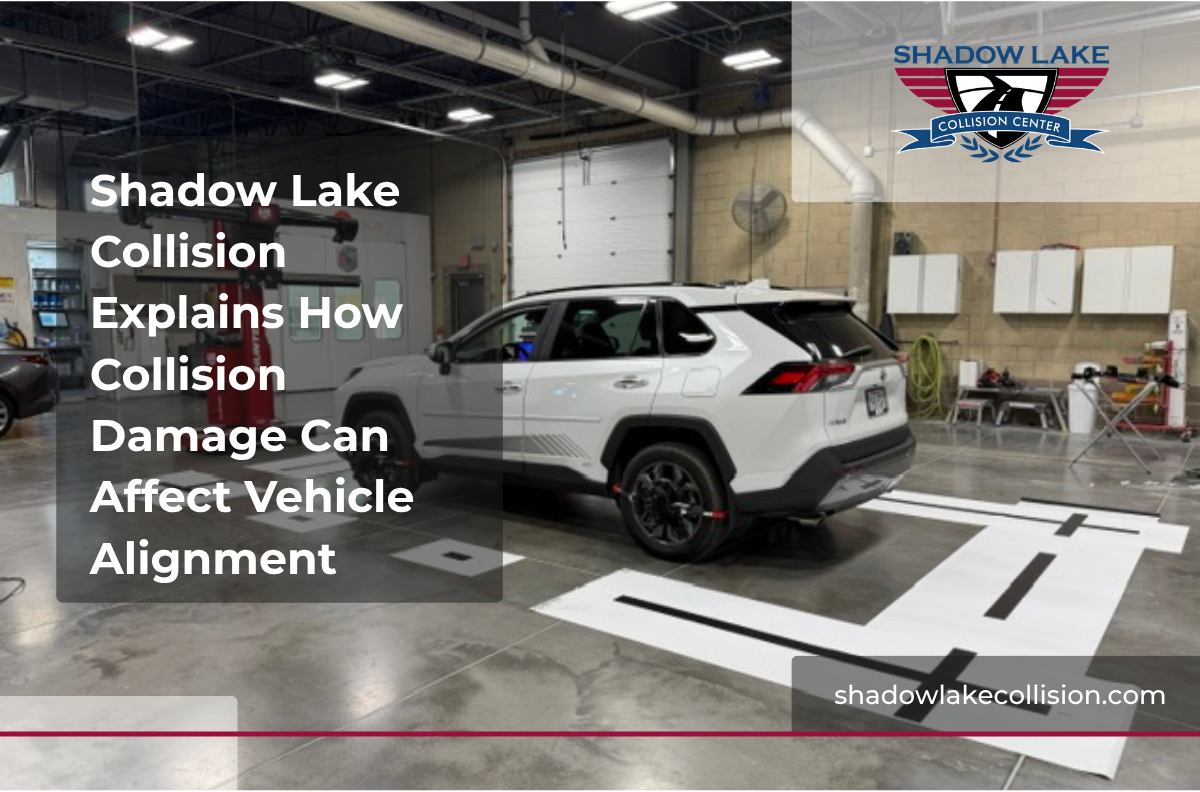
Shadow Lake Collision Explains How Collision Damage Can Affect Vehicle Alignment
Papillion, NE - September 21, 2026 - PRESSADVANTAGE - Shadow Lake Collision has published consumer guidance explaining
Press Release Disclaimer: This is a press release distributed through the XPR Media network. It has not been independently verified by our newsroom.

Papillion, NE – September 21, 2026 – PRESSADVANTAGE –
Shadow Lake Collision has published consumer guidance explaining how collision damage can affect vehicle alignment and why alignment-related concerns may not always be apparent immediately after an accident. The September resource focuses on impacts involving wheels, suspension and steering components, mounting areas, and vehicle structure that can influence wheel positioning and the broader collision repair plan.
The guidance expands on Shadow Lake Collision’s collision repair information by explaining why a vehicle that remains drivable after an accident can still warrant evaluation when the collision involves areas associated with wheel position.
Vehicle alignment describes how the wheels are positioned relative to the vehicle and road. Suspension and steering components help establish and control that position, while mounting areas connect those components to the vehicle. A collision concentrated around one of these areas can make alignment-related evaluation relevant.
Visible exterior damage does not determine whether alignment has been affected. One collision can cause substantial body damage without changing wheel positioning, while another with less visible damage can involve a wheel or nearby suspension components.
Wheel-area impacts provide one example. Collision forces directed toward a wheel can involve the wheel itself as well as surrounding suspension, steering, and mounting components. Technicians can use the impact location and documented damage to identify which areas require closer inspection rather than assuming that every nearby component has been affected.
Changes in steering or handling can provide additional information after an accident. A vehicle may pull to one side, the steering wheel may no longer appear centered during straight travel, or the driver may notice a difference in steering behavior.
These observations can help identify the need for evaluation, but they do not independently diagnose a particular damaged component. Some alignment-related conditions may also produce few obvious symptoms from the driver’s perspective.
Suspension components form an important part of the evaluation because they help maintain wheel position. Depending on vehicle design, these components can include control arms, struts, links, knuckles, and related assemblies.
Mounting areas can also be relevant. When collision forces involve a wheel or suspension area, technicians may evaluate both the individual component and the location where it attaches to the vehicle.
This distinction helps separate a routine alignment adjustment from a collision-related condition. If a damaged suspension, steering, mounting, or structural component is contributing to wheel positioning, that condition can become part of the repair plan before final alignment is established.
Shadow Lake Collision’s auto body repair information provides additional context about evaluating and restoring vehicle components affected during an accident.
Vehicle structure can become another consideration when the documented impact involves areas that establish reference points for suspension or body components. Inspection and measurement can provide additional information when collision conditions make structural involvement relevant.
The September guidance does not present structural measurement or wheel alignment as an automatic requirement after every accident. The appropriate evaluation depends on impact location, documented damage, affected components, and the individual vehicle.
Measurements can help distinguish observable symptoms from documented conditions. Alignment measurements provide information about wheel positioning relative to vehicle specifications. When a measurement falls outside specification following a collision, repair planning can include determining whether a damaged or displaced component is contributing to that result.
Repair sequencing is therefore important. Collision-related component damage can need to be addressed before final wheel alignment measurements and adjustments are completed.
This approach also explains why two vehicles with similar-looking exterior damage can require different repair plans. A collision concentrated on an exterior panel presents different considerations from an impact directed through a wheel or suspension area.
Manufacturer repair information can further define applicable inspections, measurements, repair procedures, and component requirements because suspension designs and vehicle construction vary among makes and models.
Shadow Lake Collision provides additional information about its manufacturer-focused repair approach through its OEM certifications resource.
Modern driver-assistance technology can add another vehicle-specific consideration. Depending on the vehicle and repairs performed, work involving steering, suspension, structural components, or wheel alignment can intersect with diagnostic or calibration procedures specified by the manufacturer.
The presence of driver-assistance technology does not mean every post-collision alignment requires calibration. Applicable procedures depend on the vehicle, installed equipment, affected components, repairs performed, and manufacturer requirements.
For Papillion drivers, the September guidance presents a four-part framework for understanding post-collision alignment evaluation. The process considers where the vehicle absorbed the impact, whether wheel-positioning components were within the affected area, whether inspection or measurements identify a collision-related condition, and which vehicle-specific procedures apply to the documented repair.
This framework distinguishes post-collision alignment evaluation from routine wheel alignment. Routine service addresses wheel positioning itself, while collision repair can first require determining whether accident damage has affected a component responsible for establishing that position.
The September publication adds an alignment-specific topic to Shadow Lake Collision’s broader consumer repair information. Its central point is that post-collision alignment is evaluated as part of the complete affected area rather than solely according to whether a vehicle visibly pulls to one side.
Shadow Lake Collision provides collision repair and auto body repair services for vehicle owners in Papillion, Omaha, and surrounding Nebraska communities. The company supports modern collision repairs through structured repair planning and manufacturer-focused repair procedures. Its Papillion facility is located at 1215 Applewood Dr, Papillion, NE 68046.
###
For more information about Shadow Lake Collision – Papillion, contact the company here:
Shadow Lake Collision – Papillion
Eric Dawson
(402) 763-5200
info@shadowlakecollision.com
1215 Applewood Dr, Papillion, NE 68046