Printful Breaks Down Custom T-Shirt Turnaround Times by Printing Method
New guide separates production time from delivery time, compares six decoration methods, and shows sellers how to work
Press Release Disclaimer: This is a press release distributed through the XPR Media network. It has not been independently verified by our newsroom.
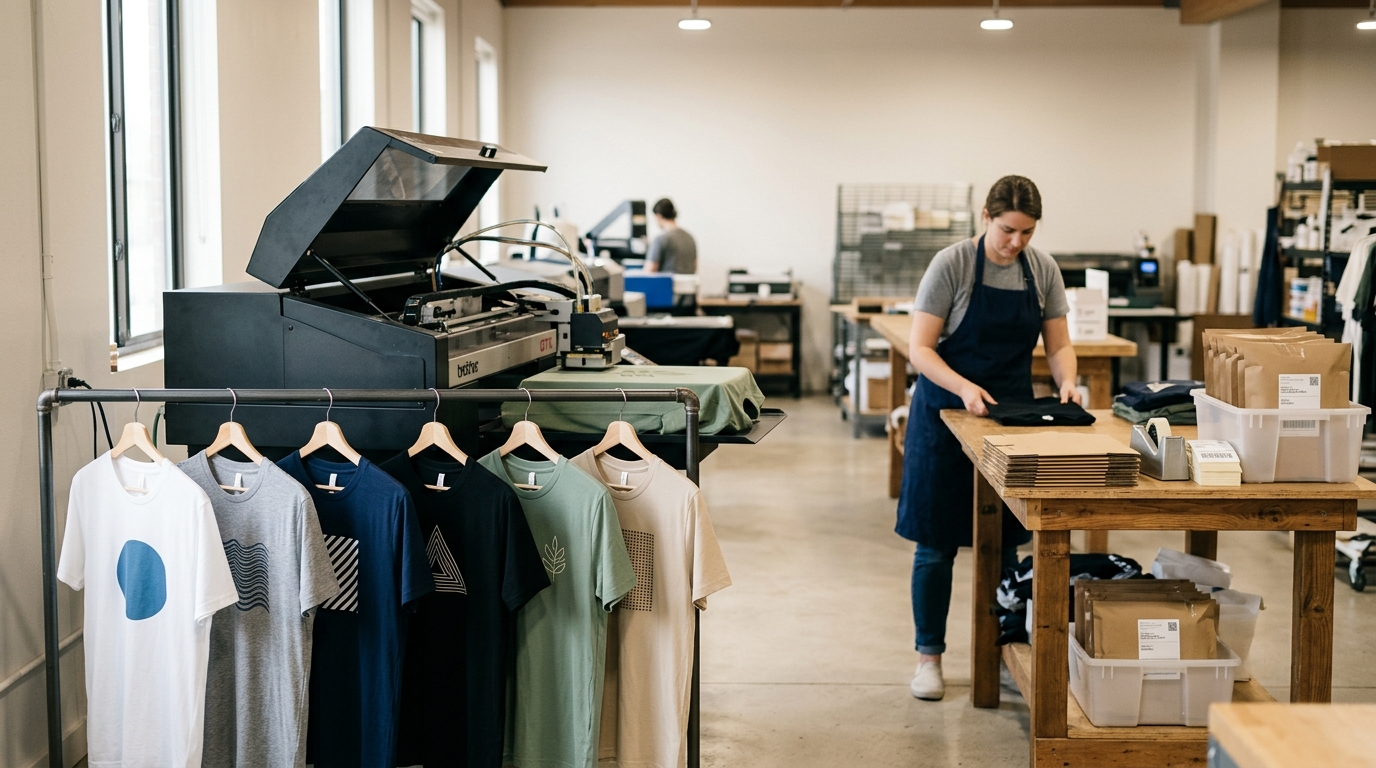

New guide separates production time from delivery time, compares six decoration methods, and shows sellers how to work backward from event deadlines
CHARLOTTE, NC, UNITED STATES, September 29, 2026 /EINPresswire.com/ — Printful, a leading global print-on-demand and fulfillment company, has released a new guide explaining what custom t-shirt turnaround time actually covers, how long six common printing methods typically take, and which factors sellers can control to get orders to customers faster. The resource is aimed at merchants, event organizers, and businesses planning apparel orders around fixed dates.
Production Time and Delivery Time Are Two Separate Clocks
According to the guide, turnaround time is the total time it takes for an order to reach a customer, and it is made up of two separate stages. Production time covers file preparation, running the print, curing or drying, and a final quality check before packing. Delivery time is the shipping window after the shirt leaves the facility, which depends on the carrier, the shipping method, and the destination. The resource adds that product availability can delay the start of the clock if the chosen style is out of stock.
The custom t-shirt printing turnaround time guide lists typical ranges by method. Direct-to-garment printing runs 5 to 9 business days and suits small orders, full-color designs, and photorealistic art, while DTFlex takes the same 5 to 9 days for bold, textured designs with a soft feel. Embroidery takes 6 to 11 business days, all-over printing and sublimation 7 to 12, UV printing for hard-surface items such as mugs and phone cases 5 to 10, and knitting 8 to 14 business days, the longest range because the garment is constructed from scratch. Printful notes that digital methods are generally faster for smaller runs.
What Slows an Order Down
Order size, design complexity, and the number of print locations all add production time, the guide explains. Larger orders take longer to print, cure, and check, and some print providers set minimum quantities for methods such as screen printing. Simple one-color logos move faster than multi-layer, full-color artwork, and each additional print placement adds prep time. Most methods have no formal artwork approval step, but embroidery requires a digitized design to be approved first, and files that ignore print guidelines can be rejected and sent back for corrections.
Fabric, fit, and stock availability also affect scheduling, and the resource highlights seasonal demand as a major variable. Backlogs build during the holiday season, back-to-school season, and major sale events, when order volume spikes. For anyone ordering for a specific date, Printful recommends working backward from the event: production time plus shipping time plus a buffer equals the order-by date. Merchants who sell t-shirts online are also pointed to Printful’s holiday-readiness guide for seasonal cutoff dates and best practices.
How to Speed Up an Order
The guide lays out several ways to shorten the wait. Choosing a fulfillment center close to the delivery address cuts transit time, expedited shipping is available from many print providers for an added cost, in-stock products enter production immediately, and submitting sharp, high-resolution design files avoids the back-and-forth that low-quality artwork triggers. Finalizing shirt style, colors, and text placement in the design studio before submitting an order prevents post-submission revision rounds, which the resource says directly extend turnaround.
“Most late orders are not slow printers, they are late decisions. Once sellers understand the two clocks behind turnaround time, they can plan around them and hit their dates,” said Davis Sarmins, Director of Growth Marketing at Printful.
On bulk orders, the guide notes that large runs are processed as a single batch with setup done once, which lowers per-unit pricing, and that volume discounts apply from a minimum of 25 shirts. Buyers of company shirts and other large runs are advised to weigh price against deadline during seasonal rushes and to ask about split shipments if an early partial delivery would help. Printful closes with a four-step path: create a free account and connect a sales channel such as Shopify, Etsy, or TikTok Shop; choose a t-shirt style, fabric, and fit; design and preview the merch in the Design Maker; and submit a single order or a bulk order. The full guide is available now on the Printful blog.
About Printful
Printful is a global ecommerce platform and on-demand production partner that helps entrepreneurs and businesses create and sell custom products online. Through in-house production, fulfillment services, ecommerce integrations, and design tools, Printful enables brands to launch and grow without holding inventory.
Maria Kennedy
Printful
email us here
Visit us on social media:
LinkedIn
Instagram
Facebook
YouTube
TikTok
X
Legal Disclaimer:
EIN Presswire provides this news content “as is” without warranty of any kind. We do not accept any responsibility or liability
for the accuracy, content, images, videos, licenses, completeness, legality, or reliability of the information contained in this
article. If you have any complaints or copyright issues related to this article, kindly contact the author above.

Media gallery