Antares Puts Race-Proven Power Electronics Inside Nuclear Reactor
In 2019, Luiz Oliveira ran the hybrid power unit on Valtteri Bottas’s Mercedes through a Formula 1 championship
Press Release Disclaimer: This is a press release distributed through the XPR Media network. It has not been independently verified by our newsroom.


In 2019, Luiz Oliveira ran the hybrid power unit on Valtteri Bottas’s Mercedes through a Formula 1 championship season. Today he runs power conversion for a nuclear reactor.
This press release features multimedia. View the full release here: https://www.businesswire.com/news/home/20260901361959/en/
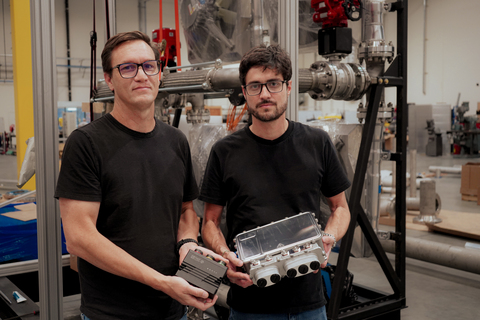
James Nero, Electrical Integration Engineer, and Luiz Oliveira, Product Development Engineer, with Motion Applied hardware headed into Antares’ power conversion system at the company’s Torrance, California, facility.
The overlap is no coincidence. It turned a Formula 1 approach into the operating model for Antares’ power-conversion hardware.
The company today announced a partnership with Motion Applied, the UK-based Tier One technology provider, to supply race-proven power electronics for its microreactor power-conversion system. Motion Applied brings decades of high-performance electronics and electrification experience from motorsport and other demanding sectors into the program, giving Antares access to mature, production-grade technology rather than starting from a blank sheet. The hardware has been developed under the extreme duty cycles of high-performance motorsport, manufactured at volumes the nuclear industry has never approached, and qualified against reliability standards forged on production runs measured in the millions.
For Motion Applied, the partnership represents a further extension of technology originally developed for the highest levels of motorsport into critical infrastructure. Its power electronics are designed for environments similar to those of microreactors and expected to operate safely and consistently in demanding field conditions.
Bespoke has limitations
For fifty years, the nuclear industry built one of everything. Custom forgings, custom vessels, custom instrumentation, fabricated once for a site that would likely never see a second unit. The engineering was extraordinary. The cost structure was not survivable. “Bespoke” was never a property of nuclear physics, but a property of low volume.
“The nuclear industry has never lacked for brilliance. Its instinct has traditionally been to design the hard thing itself,” said Dr. Rian Bahran, Chief Nuclear Officer at Antares. “But vertical integration is a tool, not a binding principle. Automotive has put decades and enormous capital into power electronics R&D, at a scale nuclear has never had the market to support. This partnership recognizes the brilliance of the automotive industry. We are harnessing a proven solution faster and at a fraction of the cost. Our reactor makes about as much electricity as one high-performance car, and that means a century of engineering is available to us.”
The advantage of being small
An Antares reactor’s electrical output sits in the same range as a high-performance car’s drivetrain. At that size, power-conversion requirements fall inside a supply chain that already ships millions of units a year, qualified to automotive functional-safety and zero-defect standards. A gigawatt plant cannot do this. The advantage exists precisely because Antares builds small.
Oliveira arrived at Antares after a decade in motorsport: trackside race engineering with Honda Performance Development in IndyCar, Formula 1 power units at Mercedes-AMG High-Performance Powertrains, and then hypercar powertrain development at Czinger Vehicles in Torrance, where he led the development of the 950kW hybrid powertrain and the vehicle validation program. At Antares, he leads the technical development of the power-conversion program and supports its supply chain.
“In racing you find out on Sunday whether your part works, in front of everyone and then you do it again the next week,” Oliveira said. “That pressure produced components with a reliability record nuclear has never had the volume to match. Nobody buys a car and wonders whether the engine will last. That confidence came from building tens of millions of them.”
The idea did not originate inside the company’s own assumptions. It arrived during Oliveira’s job interview.
Antares’ technical panel asks candidates to present a proposed architecture. Oliveira used his slot to argue that the power-conversion system should draw on Formula 1 componentry rather than bespoke nuclear design.
“It sounded like a contradiction,” he said. “You’re interviewing at a company that builds its own hardware, and your pitch is that it shouldn’t. What I’ve learned since is that the panel wasn’t testing whether I’d agree with them. A year on, the approach has legs, and we’ve brought in more engineers from automotive to carry it.”
That willingness to measure an idea by its merit, wherever it comes from, is how the company operates.
“This partnership shows how technology developed for the highest levels of motorsport can be transferred into critical infrastructure,” said Samir Maha, CEO at Motion Applied. “Our power electronics are built to perform in environments where efficiency, durability and reliability are non-negotiable. Working with Antares allows us to apply that capability to a new generation of compact power systems, where proven technology can help accelerate deployment and reduce technical risk.”
Vertical integration as a tool
Antares remains vertically integrated where it matters. In Torrance, the company machines, assembles, and tests reactor hardware across 322,000 square feet. Plenty of parts remain bespoke and always will: nuclear-grade graphite, certain forgings, specialty instrumentation. Those only get cheaper as the order book grows. Everything else is judged by a single question: does building it make the reactor better, or does it merely make it Antares’?
The approach positions Motion Applied as more than a component supplier. It places the company’s proven electrification and control capability at the center of Antares’ power-conversion strategy, demonstrating how high-performance engineering can move beyond the racetrack and into sectors where reliability, repeatability and speed of deployment matter just as much.
“We’re a lean company with a hard problem, and the only way to solve it is to be ruthless about what we work on,” said Jordan Bramble, CEO of Antares. “We said we’d have electricity in 2027, and reactors installed in 2028. Cut the bespoke parts, buy the proven ones, and you’re manufacturing a reactor instead of commissioning one. That’s what it takes to build a fleet rather than a first.”
About Antares
Antares is a nuclear fission energy company developing compact microreactors for defense and space applications, delivering safe, reliable power where traditional energy sources cannot. Founded in 2023, Antares achieved initial criticality of its Mark-0 microreactor in 2026 under the DOE Reactor Pilot Program, and is on track to produce electricity in 2027, with initial production deployments to U.S. military installations beginning in 2028. Antares operates facilities in Torrance, California; Idaho Falls, Idaho; and Aiken, South Carolina.
View source version on businesswire.com: https://www.businesswire.com/news/home/20260901361959/en/
Media gallery